Race Against the Clock: How to Play Vanishing Classics Before They're Gone for Good
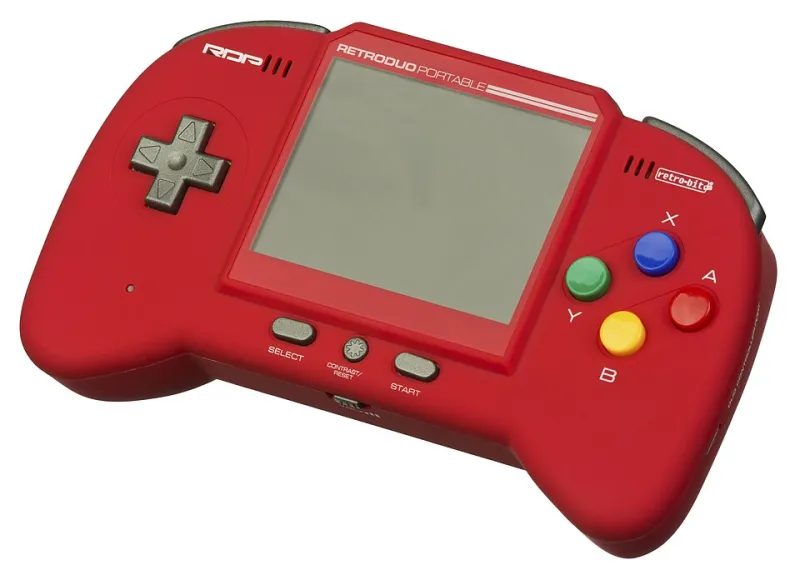
Photo: Evan-Amos, Public domain, via Wikimedia Commons
Somewhere right now, a game you love is on borrowed time. Maybe it's a quirky mid-2000s action RPG that never got a modern re-release. Maybe it's a multiplayer shooter whose servers are quietly counting down to zero. Maybe it's a licensed title — a movie tie-in, a sports game with an expired contract — sitting on a digital storefront with an invisible expiration date stamped somewhere in the fine print.
The gaming industry has a preservation problem, and it's getting worse. According to a 2023 report from the Video Game History Foundation, roughly 87% of classic games are out of print and essentially inaccessible through legitimate means. That number should alarm every gamer who's ever felt a pang of nostalgia or wanted to understand where their favorite franchises came from. The clock is ticking, and most of us aren't paying attention.
So what can you actually do about it? Quite a bit, as it turns out — and more of it is legal than you might think.
The Abandonware Gray Zone
Let's start with the uncomfortable middle ground: abandonware. These are games that publishers have effectively stopped selling, stopped supporting, and in many cases stopped caring about. The term has no formal legal standing in the US — copyright law doesn't recognize "abandonment" the way trademark law does — but in practice, many preservation communities operate in this space without much corporate pushback.
Sites like Abandonia and MyAbandonware host thousands of older PC titles, and while the legal risk technically exists, enforcement is rare for games that are decades old and commercially dead. That said, "rare" isn't the same as "nonexistent," so it's worth understanding what you're getting into. If a publisher actively sells or licenses a game — even on a single platform — downloading it elsewhere is harder to justify ethically or legally.
The honest take: abandonware is a workaround born out of institutional failure, not a loophole gaming culture invented to cheat developers. When publishers let history rot, someone has to step in.
DRM-Free Platforms Are Your Best Legal Bet
If you want to play it safe and still build a library that won't vanish overnight, DRM-free storefronts are the move. GOG (Good Old Games) has spent nearly two decades doing the unglamorous work of licensing classic titles, stripping them of restrictive digital rights management software, and selling them in formats you can actually back up and keep.
The difference matters more than most people realize. A game you bought on Steam exists in a kind of digital limbo — Valve hosts it, Valve can remove it, and if a publisher pulls the title, your access can disappear. A DRM-free file you've downloaded and backed up to an external drive? That's yours in a much more meaningful sense.
GOG's catalog is deep: we're talking Baldur's Gate, Planescape: Torment, the original Fallout trilogy, Freespace 2, and hundreds of others. The itch.io platform also sells a significant number of indie titles DRM-free. Neither library is exhaustive, but they're a great starting point for gamers who want to future-proof their collections.
Pro tip: download your purchases immediately and back them up. Don't assume the storefront will always be there. Even GOG has delisted titles before.
Emulation: Legal, Complicated, and Worth Understanding
Emulation is probably the most misunderstood topic in gaming preservation. Here's the short version: emulators themselves are legal in the United States. The Supreme Court effectively settled this in the 1990s when Connectix and Bleem both won cases defending their PlayStation emulators. Building software that replicates hardware functionality is not a copyright violation.
ROMs — digital copies of game cartridges or discs — are where things get murky. Downloading a ROM of a game you don't own is technically copyright infringement under US law, full stop. The old "you can keep a backup if you own the physical copy" rule is largely a myth; there's no clear legal carve-out that protects it.
However, if you own a physical cartridge of, say, a Super Nintendo game, dumping that cartridge yourself using hardware like a Retrode is a different conversation. You're creating a personal backup of something you legally own, and while the law isn't crystal clear, it's a much more defensible position.
Emulators like RetroArch, RPCS3 (PlayStation 3), and Yuzu's successors (the Nintendo drama there is its own saga) have made it possible to play games that have no modern commercial equivalent. For preservation advocates, this isn't piracy — it's archaeology.
What Preservation Advocates Are Actually Saying
The people working hardest on this problem aren't hackers in hoodies. They're archivists, historians, and lifelong fans who watch games disappear and feel genuine grief about it.
The Video Game History Foundation has been vocal about the stakes, particularly after the US Copyright Office's 2024 decision that largely disappointed preservation advocates by limiting exemptions for libraries and researchers. VGHF co-founder Frank Cifaldi has described the current situation as a "cultural emergency" — not hyperbole when you consider that gaming is now one of the dominant art forms of the 21st century and we're losing significant chunks of it to corporate indifference.
The Internet Archive also maintains a substantial collection of playable browser-based classics, and its legal battles with publishers over digital preservation have become a flashpoint for the broader conversation about who owns cultural history.
The argument these advocates make isn't anti-industry. It's a call for publishers to either actively sell and support their back catalogs or get out of the way and let institutions preserve them. The current middle ground — where publishers neither monetize old games nor allow others to preserve them — is the worst possible outcome for everyone except corporate legal departments.
Practical Steps You Can Take Right Now
You don't have to be an archivist to do your part. Here's a realistic checklist:
Buy and download DRM-free games from GOG or itch.io. Don't just add them to your library — actually download the installers and back them up to an external hard drive or cloud storage you control.
Check your Steam and console libraries for games that have already been delisted. If you own them, download them now. Some delisted games can still be downloaded by existing owners, but that window can close.
Support preservation organizations. The Video Game History Foundation accepts donations and does real lobbying work. If you care about gaming history, put some weight behind it.
Buy physical when it matters to you. Physical media has real limitations — discs degrade, cartridges have batteries — but a physical copy of a game can't be remotely deactivated. Limited Run Games and other boutique publishers specialize in physical releases for games that might otherwise be digital-only.
Learn about emulation responsibly. Understand the legal landscape, know what you own, and approach it with some ethical honesty about what you're doing and why.
The Bigger Picture
Gaming history is being deleted in slow motion, one server shutdown and one delisting at a time. The industry has grown into a cultural institution — a legitimate art form with a history worth preserving — but the legal and commercial frameworks around it still treat old games as liabilities rather than heritage.
That gap between what gaming is and how it's legally treated is where preservation advocates live, and it's where every gamer who's ever felt the loss of an unavailable classic should be paying attention. The tools to fight back exist. The communities doing the work are out there. The question is whether enough people care before the graveyard gets any bigger.